





🌍 Introduction
Hawaii’s Kīlauea Volcano, one of the world’s most active volcanoes, has entered a new eruptive phase inside Hawaii Volcanoes National Park. The United States Geological Survey (USGS) confirmed that fresh lava is flowing from vents on the crater floor. While the eruption is visible and spectacular, experts say no nearby towns or communities are at risk at this time.
This latest eruption reminds the world of how dynamic and powerful Earth’s forces are, even on an island known for its natural beauty and tourist attractions.
Table of Contents
🔥 What Is Happening at Kīlauea Volcano?
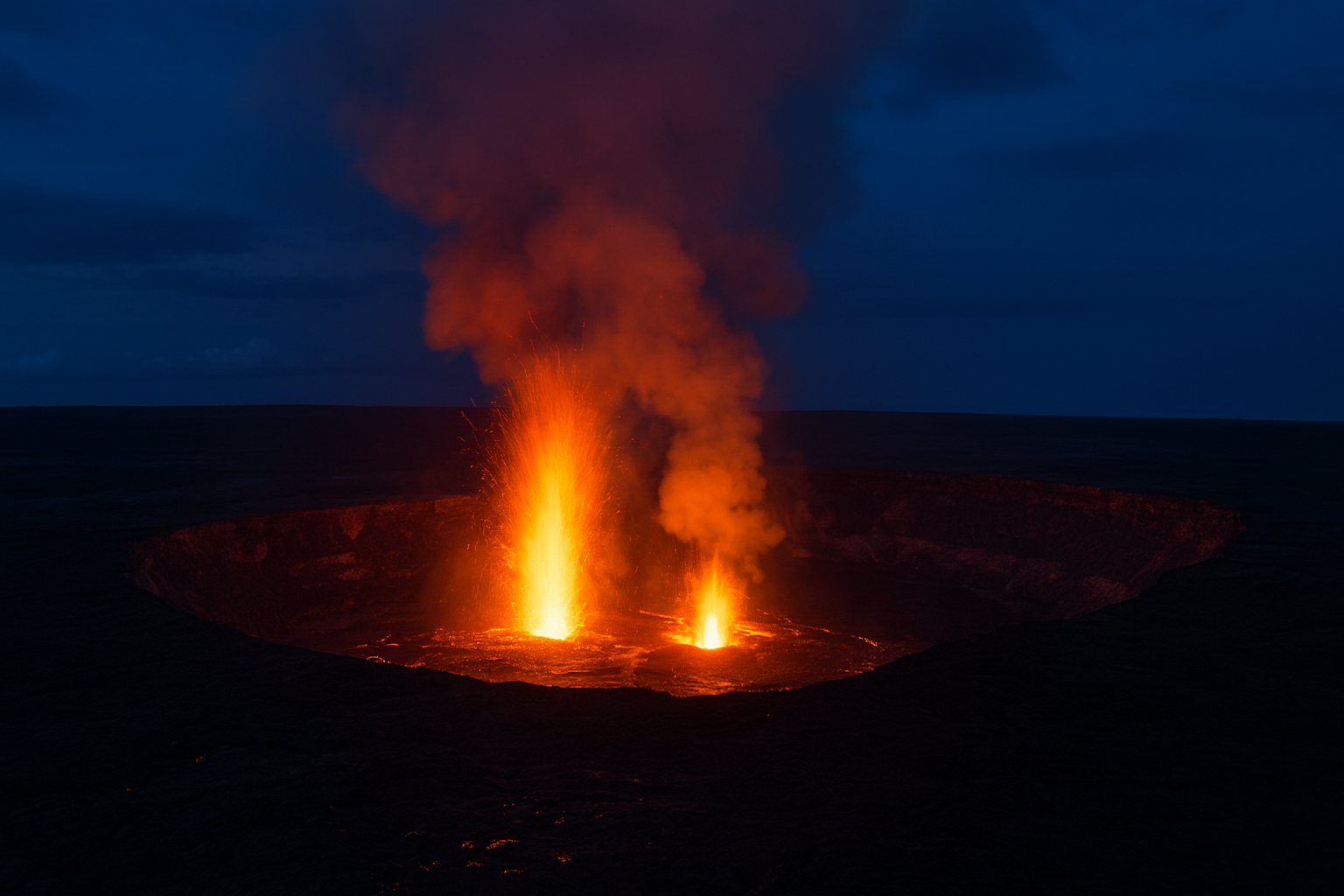
In early November 2025, scientists from the USGS Hawaiian Volcano Observatory reported new bursts of lava activity inside the Halemaʻumaʻu crater, located at Kīlauea’s summit. Glowing lava fountains and hot gas plumes are rising from multiple vents on the crater floor.
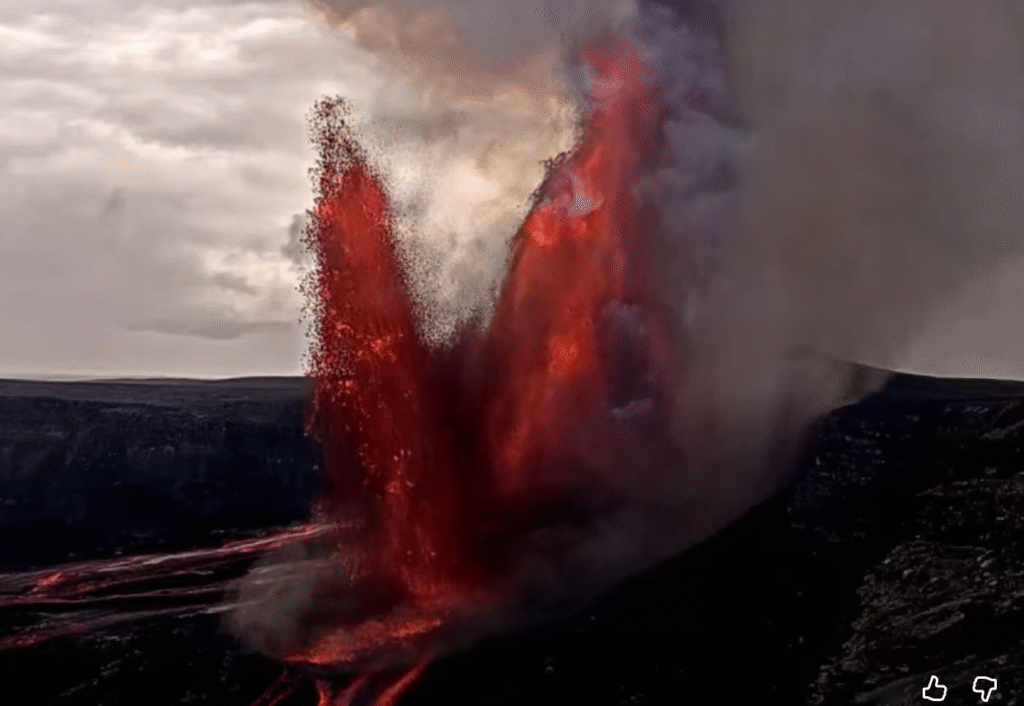
The eruption began with a series of small earthquakes beneath the volcano, followed by ground swelling (known as inflation). This pattern indicated magma was moving closer to the surface. Soon after, cracks opened in the crater, releasing lava fountains more than 300 feet (90 meters) high.
Scientists say the eruption is contained inside the crater, which lies deep within the national park. The USGS raised the alert level to “Watch,” meaning elevated activity is being monitored but poses no threat to people or homes.
🧭 Location and Nature of the Eruption
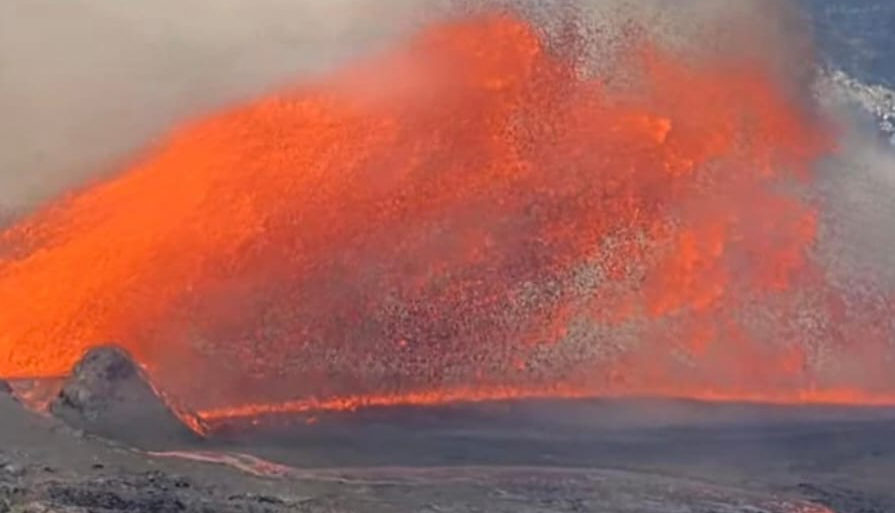
Kīlauea is located on Hawaii’s Big Island, southeast of the Mauna Loa volcano. It is one of Earth’s most active volcanoes, erupting frequently since 1983. The current eruption is centered inside the Halemaʻumaʻu crater, a deep pit within Kīlauea’s main summit caldera.
Unlike past eruptions that sent lava flowing miles away toward coastal villages, this one is limited to the crater floor. Tourists and scientists can see the glow of lava from nearby viewing points — particularly after sunset — though access is controlled for safety reasons.
🌋 What Makes This Eruption Unique
This eruption stands out for a few reasons:
- Contained Activity:
The lava is not spreading far beyond the crater, which keeps local communities safe. - Frequent Lava Fountains:
The eruption features rhythmic bursts — or “episodes” — of lava fountains that shoot up and then calm down. - Gas Emissions:
Large amounts of sulfur dioxide (SO₂) are being released, creating volcanic smog known as “vog” that can drift downwind. - Constant Monitoring:
Modern tools like tiltmeters, thermal cameras, and satellite sensors allow scientists to track even small changes in Kīlauea’s pressure and heat levels.
🔬 How Scientists Monitor the Volcano
The USGS Hawaiian Volcano Observatory (HVO) uses a network of instruments around the volcano to keep track of its behavior.
- Seismometers detect earthquakes caused by moving magma.
- Tiltmeters measure how the ground swells before eruptions.
- Gas sensors track sulfur dioxide and carbon dioxide levels.
- Thermal cameras and drones capture high-resolution lava flow images.
All this data helps predict when new vents might open or when gas emissions may affect nearby communities.
🏠 Are People in Danger?
Fortunately, no. The eruption remains inside the park, far from homes or towns. The Hawaiian Civil Defense Agency has confirmed that no evacuations are needed. However, the public is urged to avoid restricted areas due to toxic gas and unstable ground.
Local residents in Pāhala and Volcano Village may experience vog (volcanic smog) when winds blow sulfur dioxide gas downwind. Authorities are advising sensitive groups — such as children, the elderly, and people with asthma — to stay indoors during those times.
✈️ Impact on Tourism
Hawaii Volcanoes National Park remains open to visitors, but some areas around the crater are temporarily closed for safety. Park rangers have set up designated viewing points where tourists can safely see the orange glow of the lava at night — a breathtaking sight.
Tourism officials have reassured visitors that it is safe to travel to Hawaii. The eruption, in fact, has drawn more interest from photographers and nature lovers who wish to witness one of nature’s most powerful events up close (safely).
💨 Environmental and Health Concerns
Although lava flows are not threatening homes, the eruption does release large quantities of volcanic gas. When sulfur dioxide mixes with moisture and air, it forms vog — a haze that can reduce air quality.
Health experts recommend:
- Staying indoors when vog levels are high
- Using air purifiers if possible
- Avoiding strenuous outdoor activities
Wildlife and plants in the park may also be affected temporarily, especially by falling volcanic ash and changes in soil chemistry.
🧠 Why Kīlauea Is So Active
Kīlauea is part of the Hawaiian hotspot, a region where a plume of hot magma rises from deep inside the Earth’s mantle. As the Pacific tectonic plate moves over this hotspot, new volcanic islands form over millions of years.
Kīlauea has been continuously erupting in some form since the early 1980s. Its most destructive recent event was in 2018, when massive lava flows destroyed over 700 homes in the Lower Puna district. The current eruption is much smaller and confined to the summit area.
ALSO READ : Interstellar Comet 3I/ATLAS: The Strange Visitor With a Missing Tail
🔭 What Scientists Are Learning
Each eruption helps scientists better understand how volcanoes work. The current phase is teaching researchers about pressure cycles, magma movement, and gas chemistry deep beneath the surface.
Some scientists believe Kīlauea’s behavior may hint at longer-term changes in the volcano’s magma system, possibly signaling a new eruptive pattern.
Q1. Is the Kīlauea volcano currently erupting?
Yes. As of November 2025, Kīlauea is in an active eruptive phase with lava visible inside the Halemaʻumaʻu crater.
Q2. Are local communities in danger?
No. The eruption is confined to the crater inside Hawaii Volcanoes National Park. Authorities are monitoring for any changes.
Q3. What is causing the eruption?
The eruption happens as magma from deep inside Earth rises through cracks, releasing gas and lava when pressure builds up.
🌋 Conclusion
Kīlauea’s latest eruption is a reminder of how powerful and ever-changing our planet is. While it currently poses no danger to people, it continues to fascinate scientists and visitors worldwide.
Lava fountains, glowing vents, and gas plumes paint a dramatic picture of Earth’s raw energy in motion — and with modern technology, we can safely observe and study these spectacular events like never before.
Hawaii remains safe and welcoming, proving that nature’s power and beauty can coexist in harmony when respected and understood.